
You finished your last meeting at 5:30. It's now 8:45, and you're still "just checking one more thing" while dinner gets cold. Your laptop sits open on the kitchen counter. Your mind keeps looping back to that email you didn't send, that task you might have forgotten, that project that feels perpetually unfinished.
This isn't a time management problem. It's a shutdown ritual problem — or rather, the absence of one.
Without a clear ending to your workday, work doesn't actually end. It just fades into a gray zone where you're never fully working and never fully resting. The result? You're exhausted but unproductive, present but distracted, technically "off" but mentally still on. This post will show you exactly how to build a shutdown ritual that creates a clean break between work and life — not as a productivity hack, but as an act of professional self-respect.
Why Your Brain Can't Stop Working (Even When You Want It To)
The reason you can't stop thinking about work isn't a character flaw. It's a well-documented cognitive phenomenon that explains why willpower alone won't save you.
The Zeigarnik Effect Is Running the Show
In the 1920s, psychologist Bluma Zeigarnik noticed something peculiar: waiters could remember complex orders perfectly — until the moment the bill was paid. Then the details vanished. Her research revealed that incomplete tasks create a kind of mental tension. Your brain keeps them active, running in the background like browser tabs you can't close.
This is why you lie awake thinking about tomorrow's presentation. The task is open. Your brain is trying to hold it.
Open Loops Drain Your Mental Battery
Every unfinished task, unanswered question, or vague commitment takes up cognitive real estate. Cal Newport calls this "attention residue" — the mental fragments that linger after you switch contexts. Without a ritual to close these loops, you carry dozens of them into your evening.
The fix isn't to finish everything. That's impossible. The fix is to convince your brain that everything is captured, planned, and safely stored somewhere outside your head.
The Myth of the Seamless Day
Modern knowledge work has erased the natural boundaries that once separated work from rest. Factory workers heard a whistle. Farmers watched the sun set. You? You have a laptop that travels everywhere and notifications that never sleep.
Without physical boundaries, you need psychological ones. A shutdown ritual creates an artificial edge to your day — a clear signal that work is complete, even when work itself is never truly "done."
The Anatomy of an Effective Shutdown Ritual
Not all shutdown rituals are equal. Some are too flimsy to create real closure. Others are so elaborate they become another task you dread. Here's what actually works.
The Three Functions Every Ritual Must Serve
An effective shutdown ritual accomplishes three things:
- Capture: Get everything out of your head and into a trusted system
- Review: Confirm that nothing urgent is falling through the cracks
- Plan: Make a concrete decision about tomorrow so your brain can let go
Skip any of these, and your mind will keep spinning. Capture without review leaves you anxious about what you might have missed. Review without planning leaves tomorrow feeling uncertain. Planning without capture means you're building on an incomplete foundation.
The Ideal Length: 10-15 Minutes
Your shutdown ritual should be short enough to actually do and long enough to be meaningful. Ten to fifteen minutes hits the sweet spot. Anything shorter tends to feel rushed and incomplete. Anything longer starts to feel like unpaid overtime.
The goal is a ritual you'll actually perform, especially on the days when you're exhausted and just want to close your laptop and walk away. Those are precisely the days when you need it most.
Consistency Over Intensity
A mediocre ritual performed daily beats a perfect ritual performed occasionally. Your brain learns to associate the ritual with "work is ending." Over time, the ritual itself becomes the trigger for mental disengagement.
This is why the specific steps matter less than the consistency. Pick a sequence you can sustain, then protect it.
A Step-by-Step Shutdown Ritual You Can Use Tonight
Here's a concrete ritual you can implement immediately. Adapt it to your context, but don't skip the core elements.
Step 1: Process Your Inbox to Zero (5 Minutes)
This doesn't mean responding to every email. It means making a decision about every email. Delete, delegate, defer, or do — but don't leave messages sitting in limbo.
For each message, ask: "Does this require action? If so, when?" Move actionable items to your task list with a specific date. Archive everything else. The goal is an empty inbox, not an empty to-do list.
Pro Tip: Set a timer for this step. Without a constraint, inbox processing expands to fill all available time. Five minutes forces quick decisions.
Step 2: Review Today's Unfinished Tasks (3 Minutes)
Look at what you planned to do today. For each unfinished item, make one of three choices:
- Reschedule: Move it to a specific future date
- Delegate: Assign it to someone else
- Delete: Acknowledge it's not happening and remove it
The worst option is leaving tasks floating in today's list. They'll haunt you. Make a decision, even if the decision is "not this week."
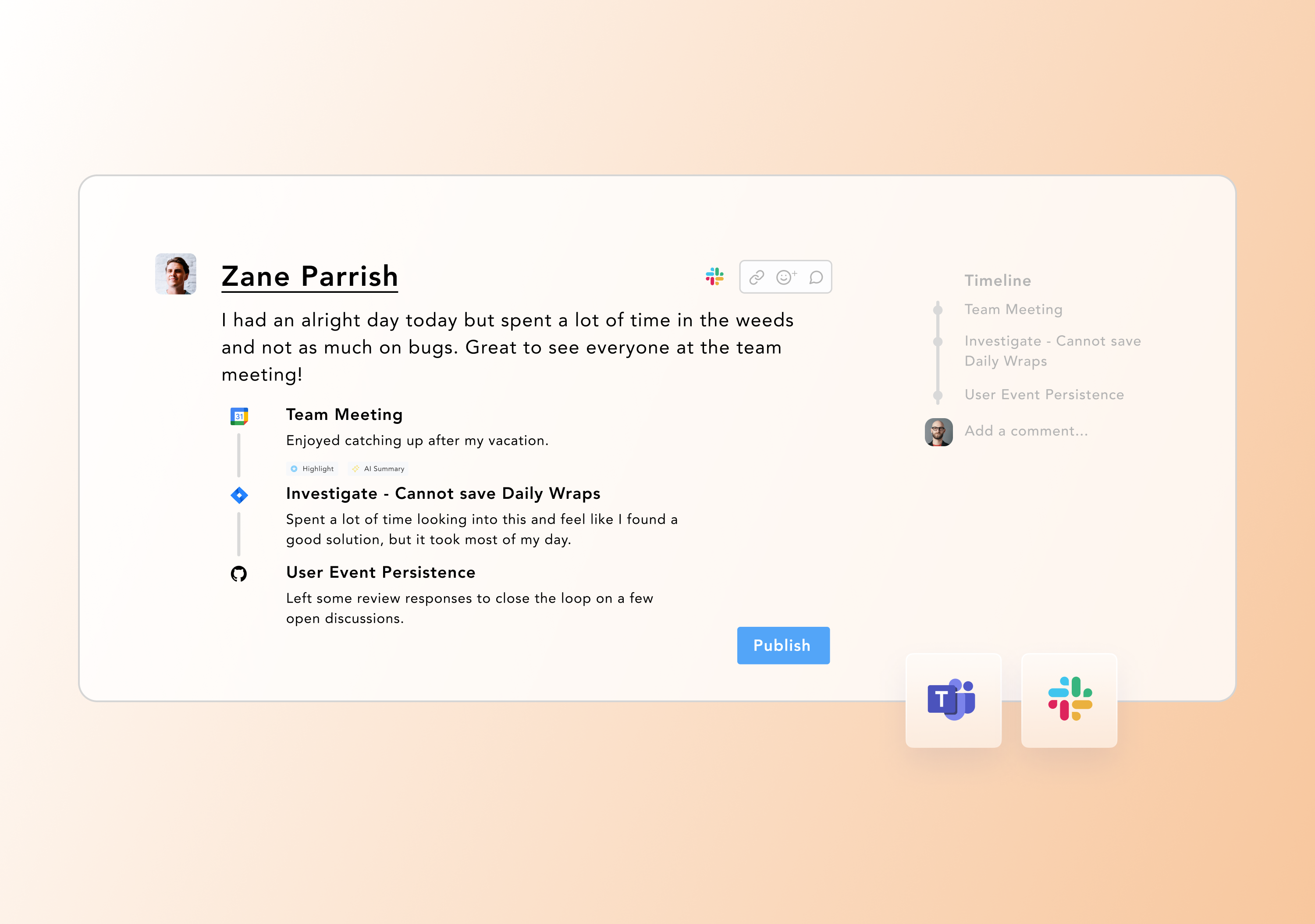
Try it in Sunsama: Sunsama's daily shutdown flow walks you through each incomplete task, prompting you to reschedule or remove it. No orphaned tasks, no lingering guilt.
Step 3: Scan Tomorrow's Calendar (2 Minutes)
Open tomorrow's calendar. Look for meetings that require preparation. Note any early commitments that affect your morning routine. Identify potential conflicts or gaps.
You're not planning tomorrow in detail — you're reducing surprise. When you know what's coming, your brain relaxes its vigilance.
Step 4: Choose Tomorrow's Priority Tasks (3 Minutes)
Select one to three tasks that would make tomorrow feel successful. Not everything you might do. Not everything you could do. Just the tasks that matter most.
Write them down somewhere you'll see them in the morning. This primes your brain for focused work and eliminates the "what should I work on?" decision fatigue that often derails mornings.
Try it in Sunsama: Sunsama's daily planning pulls in tasks from your various tools and prompts you to timeblock them onto your calendar. Tomorrow's priorities become concrete commitments, not vague intentions.
Step 5: Say the Shutdown Phrase (10 Seconds)
This sounds silly. Do it anyway.
Cal Newport recommends a verbal cue to signal completion: "Shutdown complete." Others use "Schedule closed" or "Done for today." The specific words don't matter. What matters is the auditory and kinesthetic signal that work is finished.
Say it out loud. Close your laptop. Walk away.
The Most Common Shutdown Mistakes (And How to Avoid Them)
Even well-intentioned rituals fail. Here's what derails most people.
Treating It as Optional
The shutdown ritual is most valuable on your hardest days — when you're behind, overwhelmed, or anxious about tomorrow. Those are exactly the days you'll want to skip it.
Treat the ritual as non-negotiable. It's not a reward for finishing everything. It's how you finish, period.
Checking Email After Shutdown
Nothing sabotages a shutdown faster than "one quick peek" at your inbox. You'll see something that creates anxiety or demands response, and suddenly you're back in work mode.
Build a hard rule: after shutdown, email is closed. If this feels impossible, ask yourself what emergency your inbox will contain that truly can't wait until morning. The answer is almost always "nothing."
Confusing Shutdown With Planning
Your shutdown ritual captures and clarifies. Your morning planning session prioritizes and executes. These are different activities with different purposes.
If you find yourself spending 30 minutes each evening in detailed planning, you've merged two rituals. Keep shutdown focused on closure. Save deep planning for when you're fresh.
Skipping the Physical Transition
Mental rituals work better with physical anchors. Close the laptop lid. Stand up. Leave the room where you work. Change clothes. Take a short walk.
Your brain evolved to understand physical transitions. Give it one.
Why "Finish Everything" Is the Wrong Goal
Here's where conventional productivity advice gets it wrong: it implies that the shutdown ritual is about completion. Finish your tasks, then shut down. Clear your inbox, then relax.
This framing is backward.
You Will Never Be "Done"
Knowledge work has no natural endpoint. There's always another email, another improvement, another opportunity. If shutdown depends on completion, you'll never shut down.
The ritual isn't about finishing work. It's about finishing your engagement with work — even while tasks remain incomplete.
Incompleteness Is Normal, Not Failure
That open loop on your task list? It's not evidence of personal failure. It's evidence that you're doing ambitious work with finite time. The most productive professionals consistently have more ideas than hours.
Your shutdown ritual is an act of acceptance: you did what you could with today. Tomorrow will come with its own time and energy. For now, you're released.
Rest Is Productive
A proper shutdown enables genuine recovery. And genuine recovery — not just distracted half-rest — is what allows you to return tomorrow with focus and energy.
When you skip the shutdown ritual and spend your evening in low-grade work anxiety, you're borrowing from tomorrow's productivity to fund today's illusion of availability. It's a bad trade.
How to Handle the Hardest Shutdown Scenarios
Some situations make shutdown genuinely difficult. Here's how to adapt.
When You're Behind on a Deadline
The temptation to push through is strong. Before you skip your shutdown, ask: "Will another hour tonight produce better work than a fresh hour tomorrow morning?"
Usually, the answer is no. Exhausted evening work tends to be slow and error-prone. A proper shutdown plus adequate sleep often nets you more total progress.
If you must work late, still perform a modified shutdown when you stop. Even at 10 PM, the ritual helps your brain release.
When You're Waiting on Someone Else
Open loops that depend on other people feel particularly unresolvable. You can't close them yourself.
The fix is to reframe the task. Instead of "Waiting for Sarah's feedback," your task becomes "Follow up with Sarah if no response by Thursday." Now you have a concrete next action on a specific date. The ball is in your court, even while it's also in hers.
Pro Tip: Create a "Waiting For" category in your task system. During shutdown, review it briefly. Any items that need a follow-up nudge get scheduled. Everything else can rest.
When Anxiety Keeps Intruding
Sometimes you complete the ritual and your mind still races. You've captured everything, planned tomorrow, said the phrase — but the worry persists.
Keep a small notebook by your bed. When work thoughts intrude, write them down. Don't engage with them; just capture them. Tell your brain: "I heard you. It's recorded. We'll address it tomorrow."
Often, the act of writing is enough to release the thought.
Try it in Sunsama: If you think of something after shutdown, add it to Sunsama from your phone. It'll appear in tomorrow's planning session, properly captured. Your brain can let go because the system won't forget.
How to Make the Ritual Stick: The First Two Weeks
Knowing the ritual isn't the same as doing the ritual. Here's how to build the habit.
Start With a Trigger
Attach your shutdown ritual to something that already happens reliably. "After my last meeting ends." "When my 5 PM alarm goes off." "Before I leave my desk for the day."
The trigger should be specific and consistent. "When I feel ready to stop" is too vague to build a habit around.
Lower the Bar Initially
During the first week, aim for a 5-minute ritual. Capture, quick review, one priority for tomorrow, shutdown phrase. That's it.
It's more valuable to do a short ritual daily than to attempt the full version and abandon it by Wednesday.
Track Your Streak
Mark each successful shutdown on a calendar or habit tracker. The visual chain of completed days creates its own motivation. You won't want to break the streak.
After two weeks of daily practice, the ritual will start to feel automatic. That's when you can expand it.
Your Shutdown Ritual Starter Checklist
Here's a simple framework for tonight:
- Process inbox to zero (decide, don't necessarily respond)
- Review today's incomplete tasks — reschedule, delegate, or delete each one
- Scan tomorrow's calendar for surprises
- Select 1-3 priority tasks for tomorrow
- Say your shutdown phrase out loud
- Close your laptop and leave your workspace
Set a recurring reminder for 15 minutes before you want to stop working. When it fires, begin the ritual. No exceptions for the first two weeks.
The ritual won't feel natural immediately. That's fine. You're not looking for comfort; you're looking for closure. The comfort comes later, once your brain learns to trust the system.
Your work will still be there tomorrow. Your inbox will refill. Your task list will regenerate. That's the nature of meaningful work — it's never finished.
But you can be finished for today. The shutdown ritual is how you claim that truth, close the loops, and walk away whole.


